Note: the game's text, in the player's language
A short note from stage 2, about delivery 8.
Until now, the game's pieces only showed images. Delivery 8 brings the Text piece: a sign, a score, a message on the screen. And it brings the game's languages, so each phrase shows up in the player's language.
A key for each phrase
The Text piece does not keep the phrase, but a key: a name that stays
the same in every language, like level1.sign.text. Each language's phrase lives in a
separate file, one per language, in Fluent, a file format for
translations. In the file, the key's dot becomes a hyphen:
# pt-BR.ftl
level1-sign-text = Use as setas para andar

# en.ftl
level1-sign-text = Use the arrow keys to walk
For a text that is the same in every language, like the game's name, the piece has the Do not translate box, and the phrase stays in the piece itself.
Which language shows up
The first time, the language of the player's system (in the browser, the browser's). If the game does not have that language, it follows a chain of fallbacks (each fallback is a language to fall back on) that the project sets, for example from pt-PT (Portugal) to pt-BR (Brazil), until it reaches the language the game was written in. A phrase never shows up blank: what is missing in one language comes from the next.
A key that exists in no language shows up on the screen in brackets, like
[level1.sign.text], and the game warns once in its record of events (the
log). A typo in a language's file is reported with the line and the
column, and the other phrases still work.
The same letters on every computer
The game never uses the fonts installed on the computer. The engine draws TTF and OTF fonts, the common font files, and bitmap fonts: a PNG with the letters in a grid, common in pixel art (art made of visible little squares). The letters the processor builds come out identical, down to the last byte, on Windows, Linux and macOS. The project's own fonts reach the game in delivery 10.
In pixel art, the edges of the letters are not smoothed (no antialiasing): each pixel is either on or off. In HD, the high-resolution style, TTF and OTF letters come out smooth.
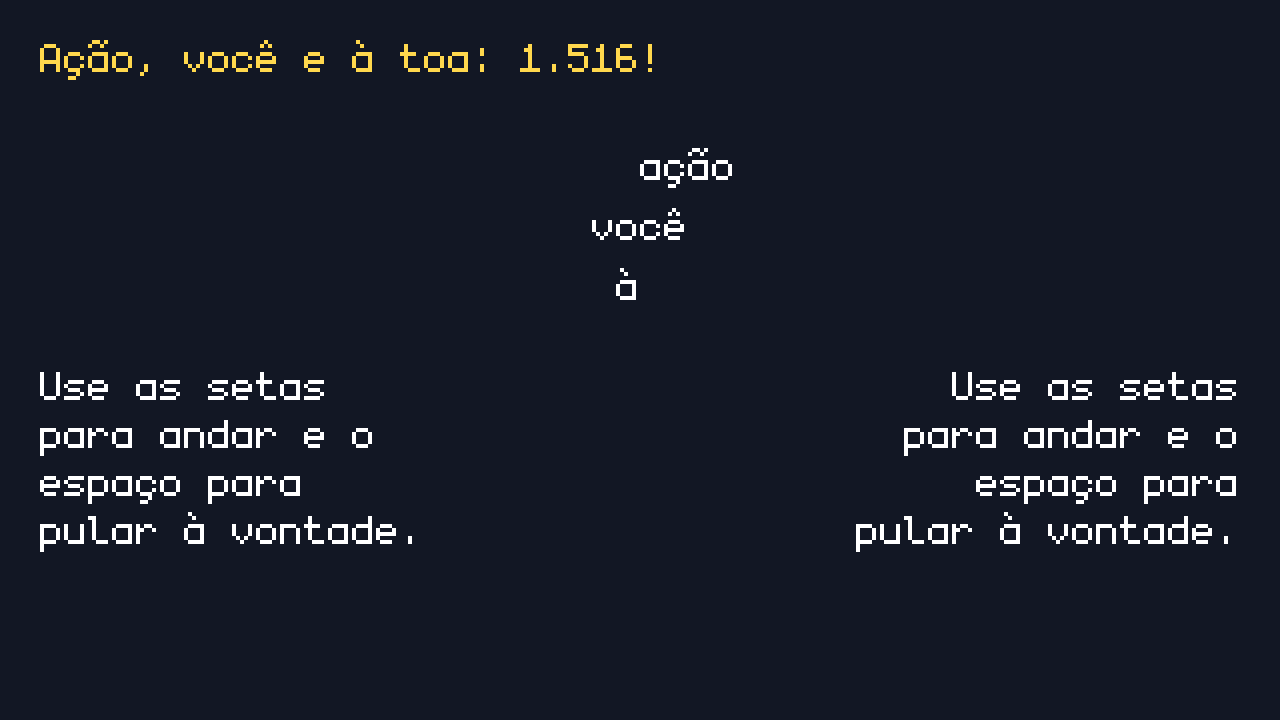 (opens in a new tab)
The font that comes from the style
A Text with no font chosen uses the font of the project's style: IBM Plex Sans in HD and monogram in pixel art. The monogram font is by datagoblin (Vinícius Menézio) and has a CC0 license, free to use.
The monogram font came in because of something the tester, the checker who took no part in the work, found: in the first review, Plex, small and unsmoothed, came out broken in pixel art.
 (opens in a new tab)
The monogram font lacks 20 letters of the Cyrillic alphabet used in Serbian, Macedonian and Belarusian. In the default font, those letters come from Plex, at the same size and unsmoothed, and none of them shows up as an empty box.
What the tester found
The tester also saw that the automatic tests used the computer's language,
so a test run could come out differently on my PC and in the cloud. Now
the tests use the language the game was written in, unless a test asks for
another. And the tester found that, with the language written pt-br in the
project, Linux, which treats capital and lowercase letters as different, did
not find the file pt-BR.ftl, and nothing warned about it. Both were fixed,
each with a test.
What comes next
Delivery 9: the editor opening the project, only to view the level's pieces and the files.